Summer, Sweat, and Smells Explained
June’s Body Spotlight
BY J. DIEKER

As summer time begins, we head outdoors to enjoy the sunshine. After stepping outside, however, we quickly notice the heat! One of the quickest ways our bodies react to the hot weather is by sweating. Sweating is actually your body’s most efficient way to cool down. In this article, we’ll discuss how our bodies sweat, what it does, and finally discuss deodorants.
So What Is Sweat?
While this may seem like an obvious question, we’re going to take a deeper look. It is made up primarily of water, and trace amounts of salt. Sweat comes from - you guessed it - sweat glands. These glands are within the layers of your skin, all over your body. A part of the brain, called the hypothalamus, senses the body is overheating, and releases neurotransmitters telling the sweat glands to begin production. This is sweat’s primary function: to cool you down when you get too hot. Sweating is the only way our bodies have to cool down! It can also help you to detox and serve to protect your skin from infection. Surprisingly, sweat on its own does not smell! The stink comes from when the bacteria living on our skin starts to break down the sweat.
But Still… That Smell is a Problem…
When we think about sweating, worries about body odor are soon to follow. Sweat is not in any way unhealthy, it can simply be mildly unpleasant! In recent years, there has been a lot of research put into the safety of deodorants. Some deodorants contain ingredients that may be harmful. Aluminum-based deodorants can clog skin pores, leading to irritation and rashes. The safety of one’s deodorant all boils down to what it is made of. A study researched the effects of deodorant ingredients and looked into the health effects they may have. Below are two tables, the first explaining what the different ingredients do, the second explaining some possible consequences of less-than-natural ingredients. By avoiding these ingredients and choosing more natural forms of deodorant, you are taking better care of your skin and body!
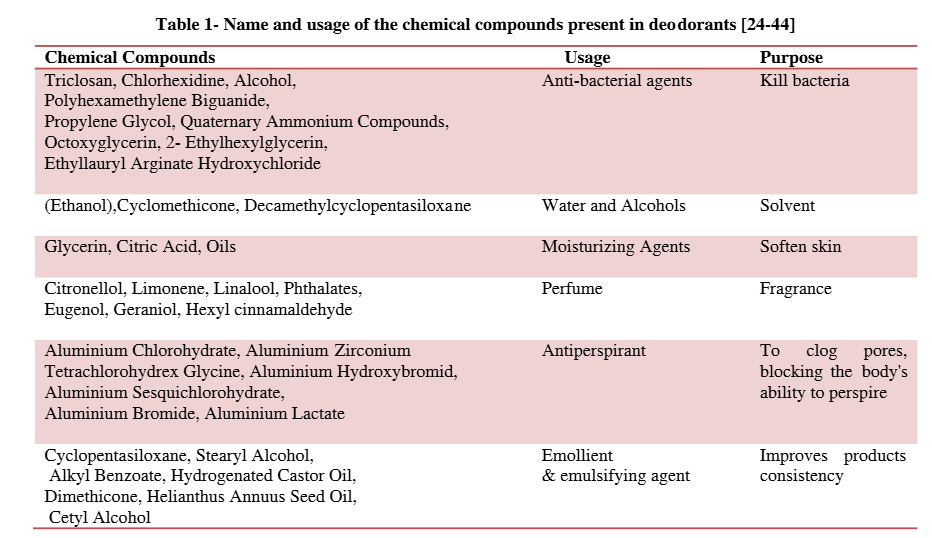
Common ingredients in deoderant and their purposes.
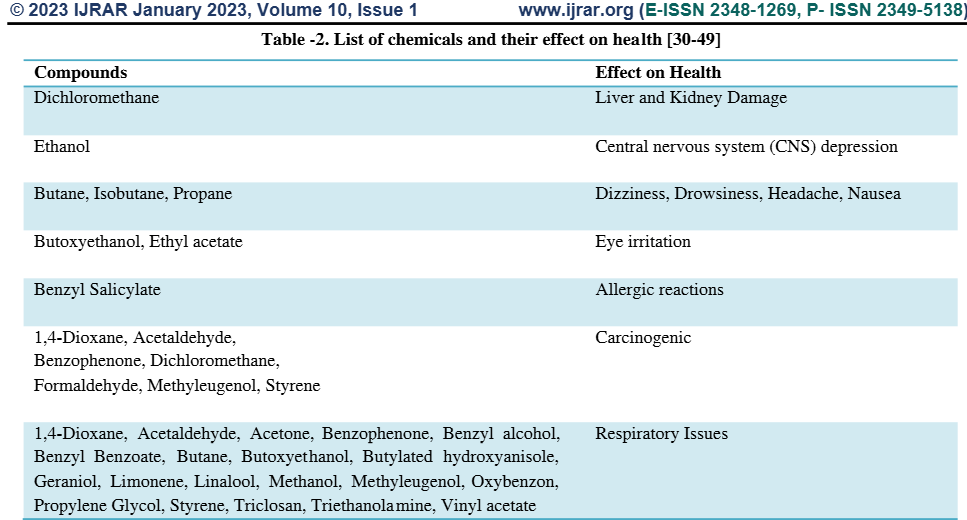
Chemicals found in some deoderants that can have negative health consequces.
So this summer, don’t sweat the smell. Your body is just taking care of you and keeping you cool! This summer stay safe, don’t put aluminum in your pits, and drink lots of water.
References
Gagnon, D., & Crandall, C. G. (2018). Sweating as a heat loss thermoeffector. Handbook of clinical neurology, 156, 211–232. https://doi.org/10.1016/B978-0-444-63912-7.00013-8
Natsch A. (2015). What Makes Us Smell: The Biochemistry of Body Odour and the Design of New Deodorant Ingredients. Chimia, 69(7-8), 414–420. https://doi.org/10.2533/chimia.2015.414
Professional, Cleveland Clinic Medical. “Sweat.” Cleveland Clinic, 20 Apr. 2026, my.clevelandclinic.org/health/body/sweat. Accessed 5 June 2026.
Singh, Mishu. “Understanding Deodorants: A Mini-Review on Potential Indoor Pollutants.” International Journal of Research and Analytical Reviews, vol. 10, no. 1, Jan. 2023, doi:10.13140/rg.2.2.15591.83365.
Teerasumran, P., Velliou, E., Bai, S., & Cai, Q. (2023). Deodorants and antiperspirants: New trends in their active agents and testing methods. International journal of cosmetic science, 45(4), 426–443. https://doi.org/10.1111/ics.12852